
Live strong. Eat wise. Feel alive
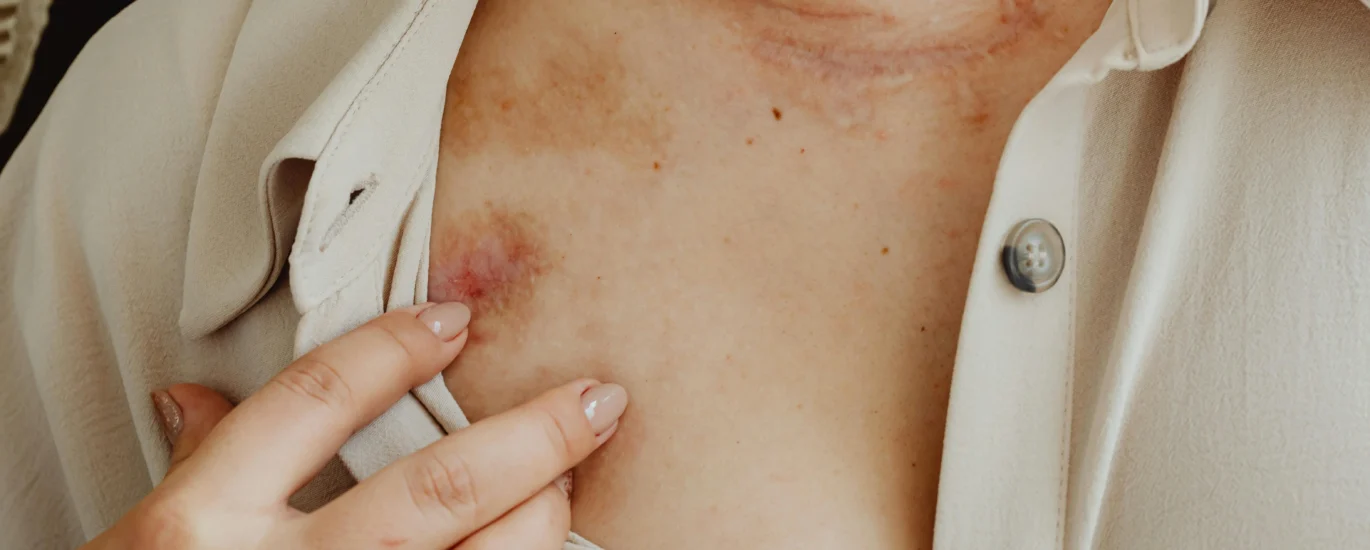
Your skin itches. It’s red. Maybe it’s bumpy, scaly, or oozing. And you have absolutely no idea what caused it.
Is it something you ate? That new laundry detergent? A bug bite? Stress? Or something serious?
Here’s the truth: most rashes are not dangerous. They’re annoying, uncomfortable, and stressful – but they go away on their own or with simple home treatment.
But some rashes are dangerous. And knowing the difference could save you a lot of suffering (or even a trip to the ER).
This guide gives you the real, no-BS breakdown of common rashes – how to identify them, how to treat them at home, and the red flags that mean “stop guessing and see a doctor now.”
A rash is any change in your skin’s appearance or texture. Your skin is your largest organ and your first line of defense. When something irritates it, inflames it, or infects it – you get a rash.
Rashes generally fall into four categories:
| Category | Cause | Examples |
| Allergic/irritant | Contact with something your skin hates | Poison ivy, nickel, fragrances, latex |
| Inflammatory | Your immune system overreacting | Eczema, psoriasis, hives |
| Infectious | Bacteria, virus, fungus, or parasite | Ringworm, shingles, scabies, impetigo |
| Autoimmune/internal | Body attacking itself or reacting to illness | Lupus rash, scarlet fever, Lyme disease |
The right treatment depends entirely on which category your rash falls into. Treat a fungal rash with steroid cream? It gets worse. Treat eczema with antifungals? Does nothing.
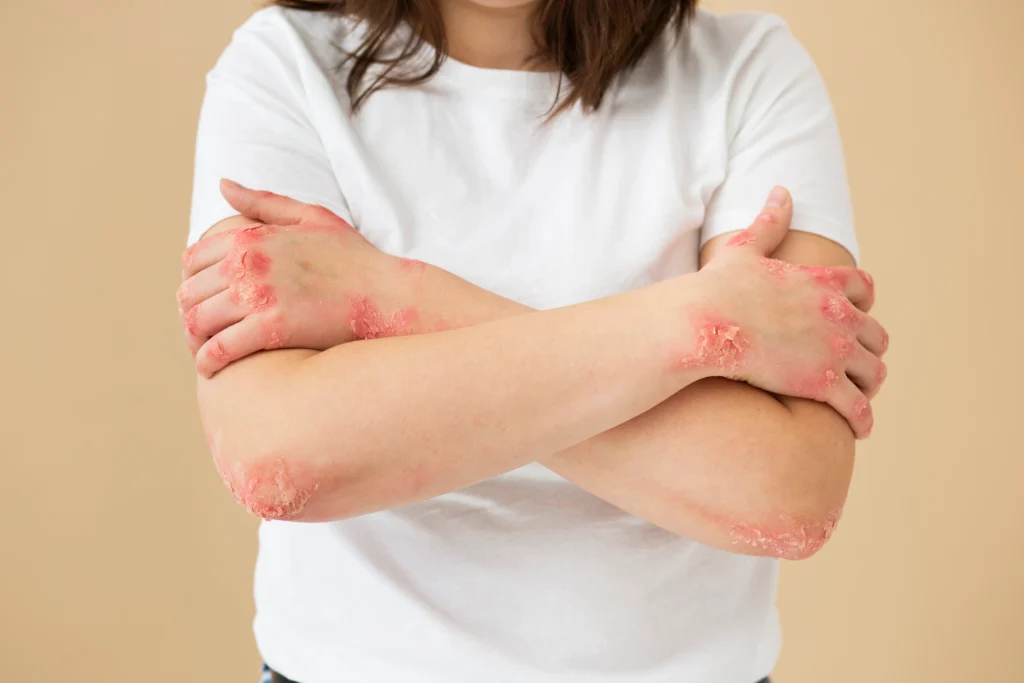
What it looks like: Dry, scaly, red, intensely itchy patches. Often appears on insides of elbows, backs of knees, neck, hands, and face. Skin may look leathery or thickened from chronic scratching.
Who gets it: Often starts in childhood. People with family history of asthma, hay fever, or allergies.
Triggers: Dry air, stress, harsh soaps, wool, sweat, food allergies (in some children).
Does it spread? No. Not contagious. But scratching can spread inflammation to nearby skin.
Home treatment: Thick moisturizers (CeraVe, Vanicream, Aquaphor) immediately after bathing. Short, lukewarm showers. Avoid fragrances. Over-the-counter (OTC) hydrocortisone 1% for flare-ups (short term).
When to see a doctor: If covering more than 20% of body, interfering with sleep, or not improving with moisturizer + hydrocortisone after 2 weeks.
What it looks like: Raised, red or skin-colored welts. Each welt appears suddenly, lasts a few hours, then disappears – often replaced by a new welt elsewhere. Extremely itchy. Can be tiny dots or large patches.
Triggers: Foods (peanuts, shellfish, eggs, milk), medications (antibiotics, NSAIDs like ibuprofen), insect stings, latex, viral infections, stress, heat, cold, pressure on skin.
Does it spread? The reaction is systemic – new welts appear randomly, not by touching existing ones.
Home treatment: Oral antihistamines (Zyrtec, Allegra, Benadryl for immediate relief – causes drowsiness). Cool compresses. Avoid known triggers. Oatmeal baths for itch relief.
When to see a doctor: If hives last more than 6 weeks (chronic urticaria) or are severe. Seek emergency care immediately if hives are accompanied by swelling of lips/tongue, difficulty breathing, or wheezing – that’s anaphylaxis.
What it looks like: Red, angry, intensely itchy rash. Often with small blisters that may ooze and crust. Exactly where you touched the irritant (poison ivy = streaks where leaves brushed skin; watch band = ring around wrist).
Common culprits: Poison ivy/oak/sumac (allergic reaction to urushiol oil), nickel (jewelry, belt buckles, jean rivets), fragrances (lotions, detergents, soaps), preservatives (many skin care products), latex gloves.
Does it spread? The rash itself does not spread. But urushiol oil (poison ivy) can spread if you don’t wash it off your hands before touching other body parts. Blister fluid does NOT spread the rash.
Home treatment: For poison ivy: wash with soap and water within 1 hour of exposure. Cool compresses, calamine lotion, oatmeal baths. OTC hydrocortisone cream for mild cases. Oral Benadryl for itch at night.
When to see a doctor: Rash on face or genitals. Large blisters. Not improving after 2–3 weeks. Signs of infection (pus, increasing pain, red streaks, fever).
What it looks like: Ringworm: circular, red, scaly patch with clearing in the middle (looks like a ring). Athlete’s foot: scaling, cracking, itching between toes. Jock itch: red, ring-shaped rash in groin folds. Often itchy. May be slightly raised.
Does it spread? Yes. Contagious. Spreads by skin-to-skin contact or shared towels, floors (locker rooms), gym equipment.
Home treatment: OTC antifungal creams (clotrimazole – Lotrimin, terbinafine – Lamisil, miconazole – Micatin). Apply to rash AND 2cm beyond the edge. Continue for 1 week AFTER rash clears (usually 2–4 weeks total). Keep area dry.
When to see a doctor: If not improving after 2 weeks of OTC treatment. If it covers a large area. If you have diabetes or a weakened immune system (fungal infections can be more serious).
What it looks like: Tiny red or clear bumps in areas where you sweat – neck, chest, groin, armpits, behind knees. Often prickly or stinging sensation (hence “prickly heat”).
Cause: Sweat ducts get blocked, trapping sweat under the skin. Common in hot, humid weather or after heavy sweating.
Does it spread? Not contagious. More sweating = more bumps.
Home treatment: Cool down. Move to air conditioning or fan. Cool (not cold) shower. Wear loose, breathable cotton clothing. No ointments or heavy creams – they block ducts further. Calamine lotion or mild hydrocortisone if very itchy.
When to see a doctor: If fever develops. If bumps fill with pus (sign of infection). If not improving after 3–4 days of cooling down.
| Symptom | Likely Rash | What NOT to do |
| Circular, red, clearing in middle | Ringworm (fungal) | DON’T use steroid cream (makes it worse) |
| Dry, scaly, inside elbows/knees | Eczema | DON’T over-wash |
| Raised welts that come and go | Hives | DON’T keep taking the trigger (food/med) |
| Streaky blisters after hiking | Poison ivy | DON’T burn the plant (inhaling smoke = lung rash) |
| Itchy between toes | Athlete’s foot | DON’T wear same socks twice |
| Tiny bumps after sweating | Heat rash | DON’T use thick creams |
| Treatment | Works For | How to Use |
| Cool compress | Any itchy rash | Wet cloth, apply 10–15 minutes several times/day |
| Oatmeal bath | Eczema, poison ivy, hives | Colloidal oatmeal (Aveeno) – soak 15 minutes |
| Hydrocortisone 1% (OTC) | Eczema, contact dermatitis | Thin layer twice daily for 5–7 days max on face, 14 days on body |
| Antihistamines (oral) | Hives, allergic rashes | Zyrtec/Allegra (non-drowsy) or Benadryl (bedtime) |
| Antifungal cream | Ringworm, athlete’s foot | Apply 2x daily for 2–4 weeks |
| Calamine lotion | Poison ivy, mild itching | Shake well, apply thin layer, let dry |
| Petroleum jelly (Aquaphor/Vaseline) | Dry/eczema skin | Apply immediately after bathing to damp skin |
| Product | Why It’s Useless |
| Homeopathic “rash relief” creams | No active ingredients (diluted to nothing) |
| Essential oils (tea tree, lavender) | More likely to cause contact dermatitis than cure it |
| Colloidal silver | Zero evidence, can turn skin blue permanently |
| Apple cider vinegar (undiluted on skin) | Causes chemical burns |
| Toothpaste on rashes | Burns, no evidence, just internet nonsense |
Go to the ER or call 911 if the rash comes with:
| Symptom | Why It’s Dangerous |
| Difficulty breathing or wheezing | Possible anaphylaxis (life-threatening allergic reaction) |
| Swelling of lips, tongue, or throat | Airway compromise |
| High fever (over 103°F / 39.4°C) | Could be serious infection (meningitis, toxic shock, scarlet fever) |
| Rash that spreads rapidly (within hours) | Possible severe allergic reaction or infection |
| Blisters in mouth, eyes, or genitals | Could be Stevens-Johnson syndrome (rare but serious drug reaction) |
| Rash that looks like bruises or bleeding under skin (purpura) | Could be vasculitis or meningococcemia |
| Severe pain (not just itch) | Shingles, cellulitis, or necrotizing fasciitis (flesh-eating bacteria) |
See a doctor within 24–48 hours if:
| Location | Possible Cause |
| Face only | Rosacea, lupus (butterfly rash), allergic reaction to skincare, shingles (if one side) |
| Hands | Contact dermatitis (soap, nickel, latex), dyshidrotic eczema (tiny blisters on fingers/palms) |
| Elbows/knees | Psoriasis (thick, silvery scales), eczema (inner elbows/knees) |
| Groin | Jock itch (fungal), inverse psoriasis, yeast infection |
| Scalp | Seborrheic dermatitis (dandruff), psoriasis, ringworm (scalp – circular bald patches) |
| Palms/soles | Hand-foot-mouth disease (viral – children), syphilis (secondary stage – rare but classic) |
| Around mouth | Perioral dermatitis (small red bumps around mouth – from steroid creams or heavy lotions) |
| Sun-exposed only | Photosensitivity reaction (medication-induced, lupus, polymorphous light eruption) |
| Rash Type | Prevention Strategy |
| Eczema | Moisturize daily within 3 minutes of showering. Avoid fragrances, wool, harsh soaps. Humidifier in dry months. |
| Contact dermatitis | Identify and avoid triggers. Patch test new skincare products on inner arm for 5 days. Wear gloves for cleaning. |
| Poison ivy | Learn to identify “leaves of three.” Wash gear and skin within 1 hour of potential exposure. Barrier cream (IvyBlock) before hiking. |
| Athlete’s foot/ringworm | Dry between toes after showering. Flip-flops in locker rooms. Don’t share towels. Change socks daily. |
| Heat rash | Stay cool. Wear loose, breathable fabrics. Shower after sweating. No heavy creams in hot weather. |
| Hives | Identify triggers (keep a food/medication log). Carry antihistamines if known allergies. |
Three possibilities:
If it’s spreading rapidly (over hours) or with fever, see a doctor.
Almost never. Neosporin is for bacterial infections in cuts/scrapes. On rashes, it often causes allergic contact dermatitis – now you have two problems. Use plain petroleum jelly if you need moisture.
For 3–5 days only. Longer use on face causes skin thinning, redness, and rosacea-like symptoms (steroid-induced rosacea). For face rashes, see a doctor first.
Absolutely. Stress triggers or worsens many rashes: hives, eczema, psoriasis, rosacea. The rash is real (not “in your head”) but stress is the trigger. Treat the rash, but also manage stress.
Not necessarily. Some rashes are painful (shingles), burning (heat rash), or just visible (lupus rash). Itchy is actually more common. But pain + rash = see a doctor.
If you’re worried, see a doctor. That’s what they’re for.
Depends:
Most rashes are annoying but harmless. They itch, they look bad, and they make you self-conscious – but they won’t hurt you.
But some rashes are genuinely dangerous. And the difference usually isn’t the appearance – it’s the context.
Ask yourself three questions:
For everything else: cool compresses, OTC antihistamines, hydrocortisone (short-term on body only), and patience. Most rashes clear in 1–3 weeks.
If it’s not getting better after 2 weeks of correct home treatment? See a doctor. You might need prescription-strength medication.
Your skin is talking to you. Sometimes it’s just complaining. Sometimes it’s screaming for help. Learn the difference.