Live strong. Eat wise. Feel alive
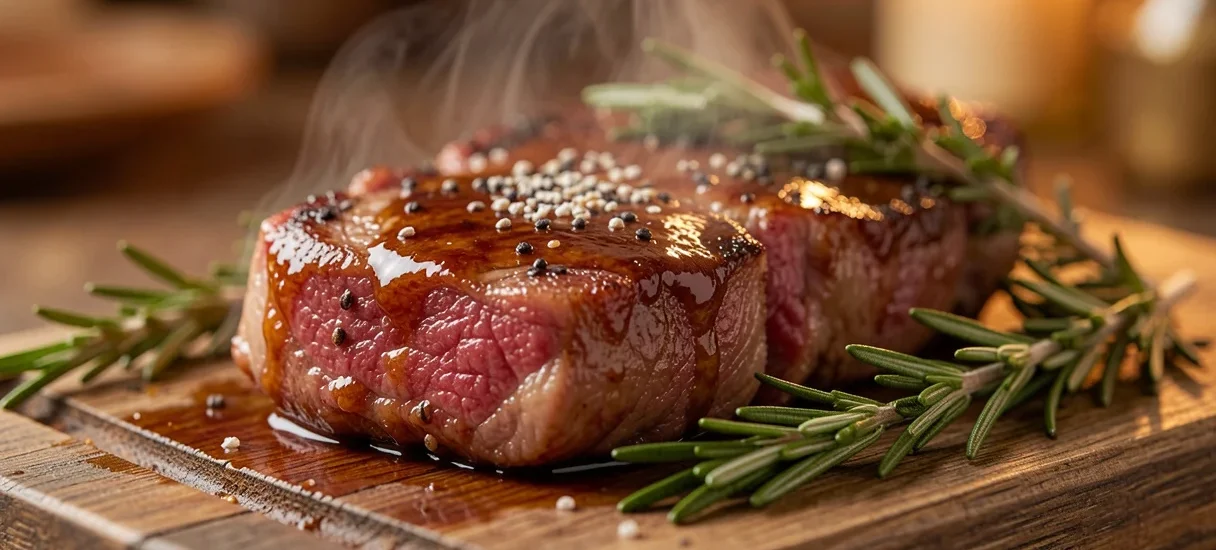
Mutton steak doesn’t have the best reputation.
People think it’s tough. Gamey. Hard to cook. Easy to ruin.
And honestly? They’re not wrong — if you cook it like beef steak.
Mutton is different. It’s leaner. Denser. It comes from older sheep (usually 12–24 months old), which means more flavor but also more potential for toughness if you don’t treat it right.
But here’s the truth: when cooked correctly, mutton steak is incredible. Deep, rich, savory flavor. Tender and juicy. And with a garlic butter baste, it rivals any beef steak on the planet.
This guide gives you a foolproof method for mutton steak — soft, juicy, and easy to make at home. No special equipment. No complicated marination. Just technique and a hot pan.
| Lamb | Mutton | |
| Age | Under 1 year | 12–24+ months |
| Flavor | Mild, delicate | Rich, bold, slightly gamey |
| Tenderness | Very tender | Denser, can be tough if not cooked properly |
| Fat color | White/pinkish | Yellowish/creamy |
| Best cooking method | Quick sear, medium-rare | Slow cooking OR tenderized + quick sear |
For this recipe: We’re using mutton steaks cut from the leg or shoulder, tenderized properly, and cooked to medium (not medium-rare).
| Cut | Tenderness | Best For | Availability |
| Leg steak | Tender (with proper prep) | Pan-searing, grilling | Widely available |
| Loin chop | Very tender | Quick sear, garlic butter | Moderate |
| Shoulder steak | Tougher (needs tenderizing) | Marinate + sear | Affordable |
| Rack chop | Most tender | Special occasion | Expensive |
Best for beginners: Leg steak or loin chop. They’re forgiving and widely available in US/UK supermarkets.
Budget option: Shoulder steak — but you must tenderize it (see method below).
| Ingredient | Amount | Notes |
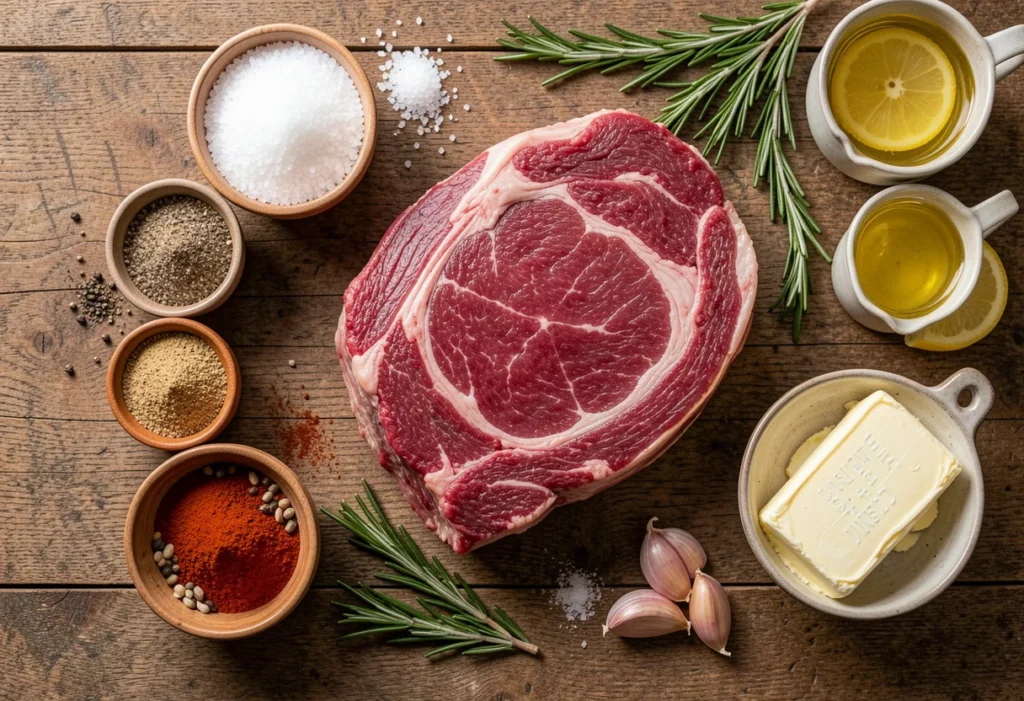
| Mutton steak | 2 (6–8 oz each) | 3/4 to 1 inch thick, leg or loin |
| Kosher salt | 1 tsp per steak | For dry brine (essential for mutton) |
| Black pepper | 1/2 tsp per steak | Freshly ground |
| Garlic powder | 1/2 tsp per steak | Optional — reduces gamey flavor |
| Paprika | 1/4 tsp per steak | Optional — adds color and warmth |
| Neutral oil | 1 tbsp | Avocado, canola, or grapeseed oil |
| Unsalted butter | 3 tbsp | For basting |
| Garlic cloves | 4–6 | Smashed, skin on |
| Fresh rosemary | 2–3 sprigs | Or thyme |
| Lemon juice | 1 tsp | Optional — brightens flavor |
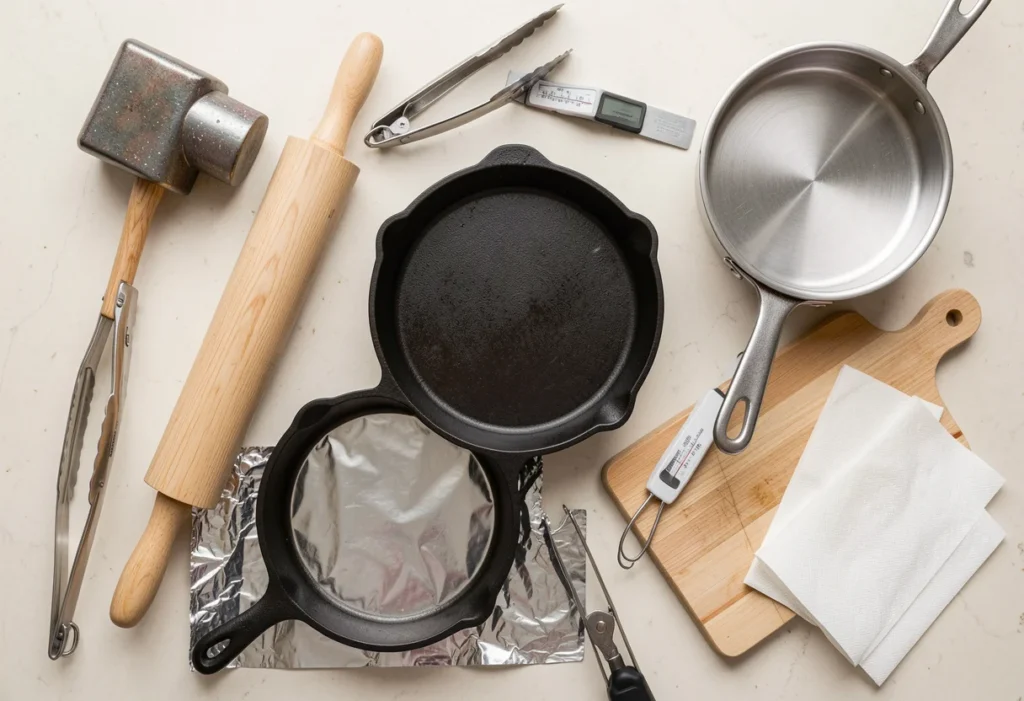
| Equipment | Why It Matters |
| Meat mallet or rolling pin | To tenderize mutton (critical step) |
| Cast-iron or stainless steel pan | Holds high heat, creates crust |
| Tongs | Flip steak without piercing it |
| Meat thermometer | Essential for mutton (easy to overcook) |
| Cutting board | For resting |
| Aluminum foil | To tent while resting |
| Paper towels | For drying steak |
Mutton benefits enormously from a dry brine. Salt penetrates the meat, breaks down proteins, and reduces gamey flavor.
| Duration | Result |
| 30 minutes | Minimal improvement |
| 2 hours | Noticeably more tender |
| 4 hours | Significantly tender, less gamey |
| Overnight (8–12 hours) | Best result — soft, mild, juicy |
How to dry brine:
If using shoulder steak (or any cut thicker than 1 inch):
| Method | How |
| Meat mallet | Cover with plastic wrap, pound to 1/2–3/4 inch thickness |
| Scoring | Cut shallow 1/4-inch slits in a crosshatch pattern on both sides |
| Fork pricking | Poke both sides 20–30 times with a fork |
Do not skip tenderizing for shoulder cuts. It makes the difference between shoe leather and soft, juicy steak.
Pat mutton steaks dry. Sprinkle kosher salt on all sides. Place uncovered in the refrigerator on a wire rack.
Minimum time: 2 hours. Best time: Overnight.
If you’re short on time, salt 30 minutes before cooking — but longer is significantly better.
Remove mutton from the refrigerator. Let it sit on the counter, uncovered.
| Why This Matters |
| Cold mutton sears unevenly. Room temperature = even cooking and less toughness. |
Use paper towels to pat the mutton completely dry (salt draws out moisture during brining — that’s good. Now remove it.)
Season with black pepper, garlic powder, and paprika (optional). Do not add more salt if you dry brined.
Place cast-iron or stainless steel pan over medium-high to high heat for 2–3 minutes.
Test for readiness: Flick a drop of water into the pan. It should dance and evaporate immediately.
Add neutral oil. Swirl to coat.
Place mutton steak in the pan away from you. Lay it down gently.
| Do NOT Do | Do This Instead |
| Don’t move it. Don’t peek. | Leave it completely alone for 2–3 minutes. |
Mutton sears faster than beef because it’s leaner. Watch for smoke but don’t panic.
After 2–3 minutes, the steak should release easily. If it sticks, wait 30 more seconds.
Flip with tongs. Sear the other side for 2–3 minutes.
| Thickness | First Side | Second Side |
| 1/2 inch | 1.5 minutes | 1.5 minutes |
| 3/4 inch | 2 minutes | 2 minutes |
| 1 inch | 2.5 minutes | 2.5 minutes |
During the last 1–2 minutes of cooking:
| Step | Action |
| 1 | Reduce heat to medium-low |
| 2 | Add 3 tbsp butter, smashed garlic cloves, and fresh rosemary |
| 3 | Tilt pan so butter pools |
| 4 | Continuously baste mutton with foaming butter for 60–90 seconds |
Basting adds moisture and richness — especially important for lean mutton.
Mutton should be cooked to medium (not medium-rare like beef). Medium-rare mutton is chewy.
| Doneness | Internal Temperature | Center Color | Recommended? |
| Medium-rare | 130–135°F (54–57°C) | Pink-red | ❌ No (chewy) |
| Medium | 140–145°F (60–63°C) | Light pink | ✅ Yes |
| Medium-well | 150–155°F (65–68°C) | Slightly pink | Acceptable |
| Well done | 160°F+ (71°C+) | No pink | Not recommended (dry) |
Pull mutton at 140°F. It will rise to 145°F while resting.
Transfer mutton to a cutting board. Tent loosely with foil.
| Thickness | Rest Time |
| 1/2–3/4 inch | 5 minutes |
| 1 inch | 7 minutes |
Why resting matters for mutton: Mutton has less fat than beef. Resting allows juices to redistribute — otherwise, it will be dry.
Look at the steak. You’ll see muscle fibers running in one direction.
| Cut With the Grain (Wrong) | Cut Against the Grain (Right) |
| Long, tough fibers | Short, tender fibers |
| Chewy mutton | Soft, juicy mutton |
Slice at a 45-degree angle. Spoon reserved garlic butter over the top. Serve immediately.
| Doneness | Touch | Internal Temp | Juice Color |
| Medium-rare | Soft, springy | 130–135°F | Red-pink (chewy) |
| Medium | Firm with give | 140–145°F | Light pink |
| Medium-well | Firm | 150–155°F | Clear |
Pro tip: If you’re nervous, cook to 145°F. Slightly over is better than under with mutton.
| Method | How | Time Needed |
| Milk soak | Soak mutton in milk for 2–4 hours before cooking | 2–4 hours |
| Yogurt marinade | Coat with plain yogurt + garlic + ginger | 4–8 hours |
| Lemon juice | Sprinkle fresh lemon juice after cooking | 1 minute |
| Rosemary + garlic | Use generously in basting | During cooking |
Best for beginners: Milk soak. It’s simple and very effective.
| Side Dish | Why It Works |
| Roasted potatoes | Classic pairing, absorbs garlic butter |
| Mint sauce or jelly | Traditional with lamb/mutton |
| Garlic mashed potatoes | Complements the richness |
| Grilled vegetables | Fresh contrast |
| Red wine reduction | Elevates to special occasion |
| Mistake | Why It’s Bad | Fix |
| Skipping the dry brine | Tough, gamey meat | Salt 2–12 hours ahead |
| Cooking cold from fridge | Uneven cooking, tough center | Rest 30–45 minutes at room temp |
| Not tenderizing shoulder cuts | Shoe leather texture | Pound to 1/2–3/4 inch thickness |
| Cooking to medium-rare | Chewy, unpleasant texture | Cook to medium (140–145°F) |
| Not resting after cooking | Dry, juices run out | Rest 5–7 minutes minimum |
| Cutting with the grain | Stringy, hard to chew | Slice against the grain |
| Overcrowding the pan | Steams instead of sears | Cook one steak at a time |
| Possible Cause | Fix |
| No dry brine | Salt 2–12 hours before cooking |
| Cooked to medium-rare | Mutton needs medium (140–145°F) |
| Cut with the grain | Next time, slice against the grain |
| Didn’t tenderize shoulder cut | Pound thinner or choose leg steak |
| No rest after cooking | Always rest 5–7 minutes |
Yes. Use any heavy-bottomed pan that handles high heat:
| Pan Type | Works? | Notes |
| Stainless steel | ✅ Yes | Best alternative |
| Carbon steel | ✅ Yes | Excellent |
| Non-stick | ❌ No | Cannot get hot enough |
| Enameled cast iron | ✅ Yes | Same as cast iron |
Yes. Grill over medium-high heat:
| Thickness | First Side | Second Side | Target Temp |
| 3/4 inch | 3 minutes | 3 minutes | 140–145°F |
| 1 inch | 4 minutes | 4 minutes | 140–145°F |
Brush with garlic butter after grilling (not before — butter burns on grill).
The “finger test” is less reliable for mutton than beef. Best bet: buy a $10 meat thermometer. If you absolutely cannot:
| Doneness | Touch |
| Medium-rare (too chewy) | Soft, very springy |
| Medium (perfect) | Firm with some give |
| Well done (dry) | Very firm |
Yes. Reduce cooking time:
| Change | Why |
| Cook to medium-rare (130–135°F) | Lamb is tender, doesn’t need medium |
| Reduce sear time by 30 seconds per side | Lamb cooks faster |
| Skip the tenderizing step | Lamb is naturally tender |
| Method | How | Best For |
| Oven (lowest) | 250°F for 8–10 minutes | Whole steak |
| Pan (with butter) | 30 seconds per side in hot pan | Sliced steak |
| Air fryer | 300°F for 2–3 minutes | Thin slices |
Never microwave mutton steak. It becomes rubbery and dry.
Mutton is nutrient-dense:
| Nutrient | Per 4 oz serving |
| Protein | 22–25g |
| Iron | 15% DV (higher than beef) |
| Vitamin B12 | 40% DV |
| Zinc | 30% DV |
| Fat | 8–12g (depending on cut) |
Mutton is leaner than beef ribeye but richer in B12 and iron. Enjoy in moderation as part of a balanced diet.
Yes. Freeze raw mutton steak for up to 3 months.
| Freezing Method | How |
| Raw (best) | Wrap tightly in plastic wrap + foil or vacuum seal |
| Cooked | Cool completely, wrap tightly, freeze up to 2 months |
Thaw overnight in the refrigerator before cooking.
| Thickness | Target Doneness | First Side | Second Side | Basting | Rest |
| 1/2 inch | Medium | 1.5 min | 1.5 min | 45 sec | 5 min |
| 3/4 inch | Medium | 2 min | 2 min | 1 min | 5 min |
| 1 inch | Medium | 2.5 min | 2.5 min | 1.5 min | 7 min |
Mutton steak gets a bad reputation because people cook it like beef.
They sear it hot, pull it at medium-rare, slice it with the grain — and wonder why it’s chewy and gamey.
But when you treat mutton like mutton — dry brine it, cook to medium (not medium-rare), rest it properly, slice against the grain — it transforms.
What was once tough becomes tender. Gamey becomes rich and savory. And that garlic butter? It ties everything together.
The first time you nail a mutton steak, you’ll wonder why you ever doubted it.
Try this method once. Your next mutton steak will be soft, juicy, and unforgettable.
✅ Recipe post complete – “Mutton Steak Recipe – Soft, Juicy & Easy to Make”
Would you like me to write the next recipe from your list (e.g., Homemade Beef Burger Patties, Seekh Kabab Without Grill, or Mutton Tikka)? Just let me know.