Live strong. Eat wise. Feel alive
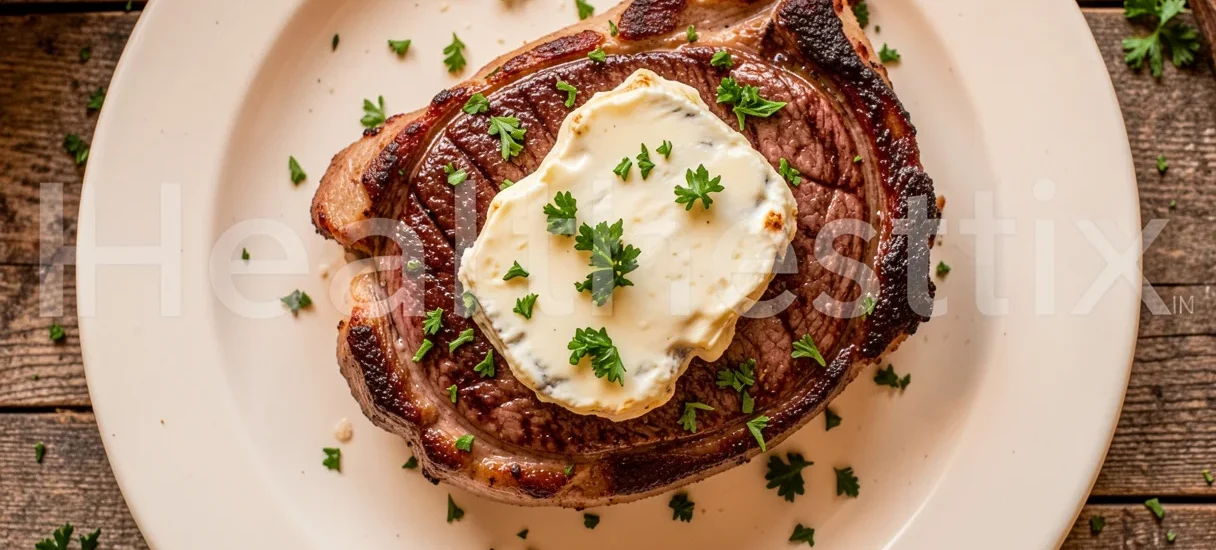
A great steak is one thing. A steak basted in sizzling garlic butter, infused with fresh rosemary, with a golden-brown crust that shatters when you cut into it? That’s something else entirely.
That’s restaurant quality.
And here’s the secret: you don’t need a professional kitchen, a grill, or expensive equipment to make it. You need a hot pan, good butter, fresh garlic, and knowing when to stop touching the steak.
The garlic butter steak is the ultimate indulgence — perfect for a weekend dinner, a special occasion, or when you simply want to eat something extraordinary on a Tuesday night.
This guide gives you a foolproof, step-by-step method for garlic butter beef steak. Juicy. Tender. Rich. And ready in under 20 minutes.
| Steak Without Garlic Butter | Steak With Garlic Butter |
| Good crust, but simple flavor | Deep, rich, aromatic flavor |
| Dry finish | Luscious, silky finish |
| One-dimensional taste | Layers of garlic, herbs, and umami |
| Restaurant quality? No | Restaurant quality? Yes |
The garlic butter basting process does three things:
| Benefit | Why It Happens |
| Adds flavor | Garlic and herbs infuse the butter, which coats every bite |
| Creates richness | Butter adds fat-soluble flavor compounds |
| Improves crust | Basting keeps the surface hot without burning |
Not all cuts work equally well. Choose one of these:
| Cut | Tenderness | Fat Content | Why It Works for Garlic Butter |
| Ribeye | Very tender | High (marbled) | Fat melts into the butter — richest flavor |
| Strip loin (New York strip) | Very tender | Medium-high | Firm texture, holds up to basting |
| Tenderloin (filet mignon) | Most tender | Low | Buttery soft, mild flavor — garlic butter adds richness |
| Sirloin | Tender | Medium | Leaner, budget-friendly, still delicious |
Best for beginners: Strip loin or sirloin — forgiving and widely available.
Best for flavor: Ribeye. The marbling + garlic butter = unmatched richness.
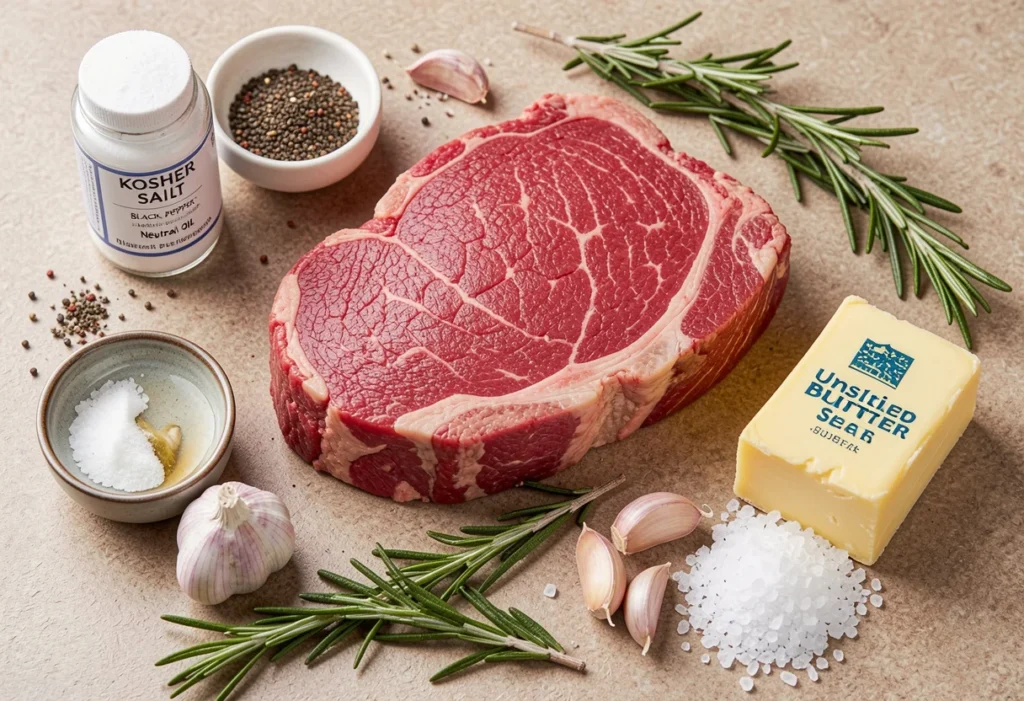
| Ingredient | Amount | Notes |
| Beef steak | 1–2 (8–10 oz each) | 1–1.5 inches thick, room temperature |
| Kosher salt | 1 tsp per steak | Do not use table salt (too salty, uneven) |
| Black pepper | 1/2 tsp per steak | Freshly ground |
| Neutral oil | 1 tbsp | Avocado, canola, or grapeseed oil (high smoke point) |
| Unsalted butter | 3–4 tbsp | High quality (Kerrygold or similar) |
| Garlic cloves | 4–6 | Smashed, skin on (skin adds flavor without burning) |
| Fresh rosemary | 2–3 sprigs | Or thyme (or both) |
| Flaky sea salt | To taste | For finishing (Maldon or similar) |
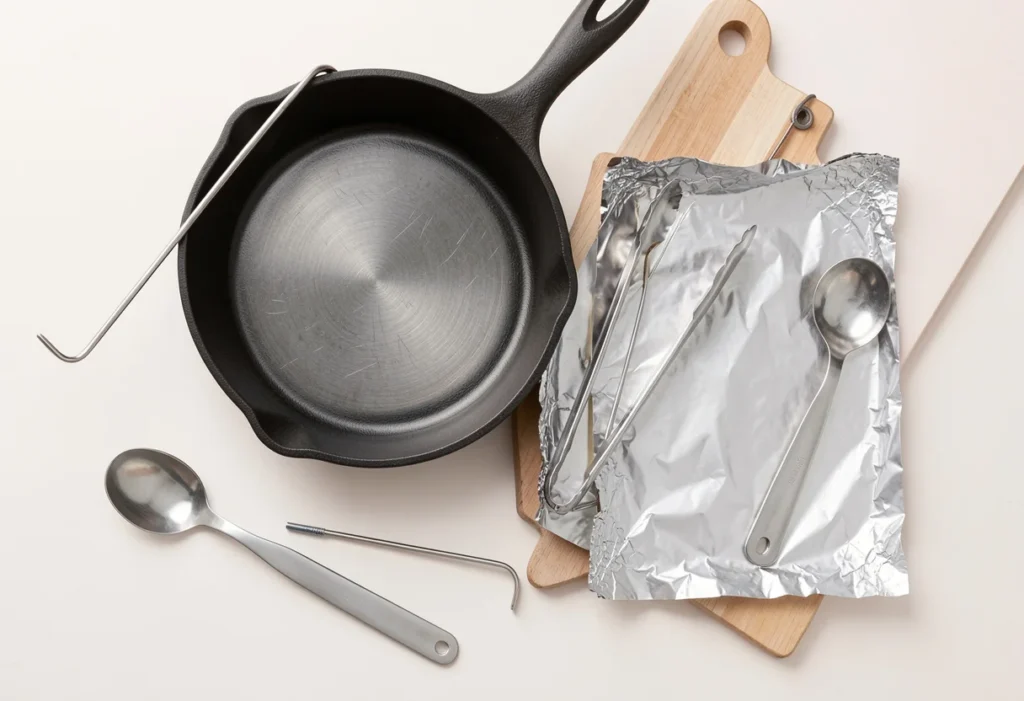
| Equipment | Why It Matters |
| Cast-iron or stainless steel pan | Holds high heat, creates crust |
| Tongs | Flip steak without piercing it |
| Meat thermometer | Removes guesswork (recommended) |
| Cutting board | For resting the steak |
| Aluminum foil | To tent while resting |
| Spoon (metal) | For basting butter over the steak |
Remove steak from the refrigerator. Let it sit on the counter, uncovered.
| Why This Matters |
| A cold steak sears unevenly. The outside burns before the inside cooks. Room temperature = even cooking from edge to center. |
Do not skip this step.
Use paper towels to pat both sides of the steak until absolutely dry.
| Why This Matters |
| Moisture turns to steam, not crust. A dry surface = deep brown, crispy, restaurant-quality crust. |
Sprinkle salt and pepper on both sides. Press it into the meat with your fingers.
| Steak Size | Salt per side | Pepper per side |
| 8 oz | 3/4 tsp | 1/3 tsp |
| 10 oz | 1 tsp | 1/2 tsp |
| 12 oz | 1.25 tsp | 3/4 tsp |
Season right before cooking — not earlier. Salt draws out moisture over time. You want that moisture inside the steak, not on the cutting board.
Place your cast-iron or stainless steel pan over medium-high to high heat for 2–3 minutes.
Test for readiness: Flick a drop of water into the pan. It should dance and evaporate immediately — not sizzle slowly.
Add the neutral oil. Swirl to coat the pan.
Place the steak in the pan away from you (to avoid oil splatter). Lay it down gently.
| Do NOT Do | Do This Instead |
| Don’t move it. Don’t peek. Don’t slide. | Leave it completely alone for 2–3 minutes. |
Why: Moving the steak prevents the Maillard reaction — the chemical process that creates a deep brown, flavorful crust.
After 2–3 minutes, the steak should release easily from the pan. If it sticks, wait 30 more seconds.
Flip the steak with tongs. Sear the other side for 2–3 minutes.
| Thickness | First Side | Second Side |
| 1 inch | 2 minutes | 2 minutes |
| 1.25 inches | 2.5 minutes | 2.5 minutes |
| 1.5 inches | 3 minutes | 3 minutes |
During the last 1–2 minutes of cooking:
| Step | Action |
| 1 | Reduce heat to medium-low |
| 2 | Add 3–4 tbsp butter, smashed garlic cloves, and fresh rosemary sprigs |
| 3 | Tilt the pan slightly so butter pools on one side |
| 4 | Use a metal spoon to continuously baste the steak with the foaming butter |
| 5 | Spoon butter over the steak 20–30 times (about 60–90 seconds) |
This basting step is what creates the restaurant-quality garlic butter steak.
The butter foams, infuses with garlic and rosemary, and coats the steak in a rich, aromatic layer of flavor.
| Doneness | Internal Temperature | Center Color |
| Rare | 120–125°F (49–52°C) | Red, cool center |
| Medium-rare | 130–135°F (54–57°C) | Warm red center (recommended) |
| Medium | 140–145°F (60–63°C) | Pink, warm |
| Medium-well | 150–155°F (65–68°C) | Slightly pink |
| Well done | 160°F+ (71°C+) | No pink (not recommended) |
Pull the steak 5°F below your target temperature. The steak will continue cooking while resting (carryover cooking).
Transfer the steak to a cutting board. Tent loosely with aluminum foil.
| Thickness | Rest Time |
| 1 inch | 5 minutes |
| 1.25 inches | 7 minutes |
| 1.5 inches | 10 minutes |
Why resting matters:
| If You Don’t Rest | If You Rest |
| Juices run out onto the cutting board | Juices redistribute inside the steak |
| Steak tastes dry | Steak stays juicy |
| Lost flavor | Maximum flavor |
Do not skip this step. Cutting into a steak immediately is the #1 mistake home cooks make.
Look at the steak. You’ll see lines (muscle fibers) running in one direction.
| Cut With the Grain (Wrong) | Cut Against the Grain (Right) |
| Long, tough muscle fibers | Short, easy-to-chew fibers |
| Chewy, stringy texture | Tender, soft texture |
Slice perpendicular to the lines at a 45-degree angle.
Save the garlic butter from the pan. Spoon it over the sliced steak. Sprinkle with flaky sea salt. Serve immediately.
| Doneness | Touch Test | Internal Temp | Best For |
| Rare | Very soft, jiggly | 120–125°F | Beef purists |
| Medium-rare | Soft, slightly springy | 130–135°F | Most people (sweet spot) |
| Medium | Firm with some give | 140–145°F | Those who want less pink |
| Well done | Very firm | 160°F+ | Not recommended (loses juiciness) |
| Side Dish | Why It Works |
| Garlic mashed potatoes | Double down on garlic flavor |
| Roasted asparagus or green beans | Fresh, bright contrast |
| Creamy mushroom sauce | Umami overload |
| Simple green salad | Cuts through richness |
| Crusty bread | To soak up extra garlic butter |
| Mistake | Why It’s Bad | Fix |
| Cooking steak cold from fridge | Uneven cooking | Rest 30–60 minutes at room temp |
| Not drying the steak | Steamed instead of seared | Pat completely dry |
| Moving the steak while searing | Prevents crust formation | Leave it alone for 2–3 minutes |
| Flipping multiple times | Disrupts crust | Flip once (twice total) |
| Burning the garlic | Bitter taste | Keep garlic skin on, add during basting (not searing) |
| Cutting immediately after cooking | All juices run out | Rest 5–10 minutes |
| Using olive oil for searing | Burns at high heat, bitter taste | Use neutral oil (avocado, canola, grapeseed) |
Yes, but reduce the salt you add to the steak. Salted butter contains about 1/4 tsp salt per 4 tbsp. If using salted butter, use half the kosher salt on the steak.
Yes. Use any heavy-bottomed pan that handles high heat:
| Pan Type | Works? | Notes |
| Stainless steel | ✅ Yes | Best alternative |
| Carbon steel | ✅ Yes | Excellent |
| Non-stick | ❌ No | Cannot get hot enough, coating damages |
| Enameled cast iron | ✅ Yes | Same as cast iron |
The “crust release” method: When the steak releases easily from the pan without sticking, it’s ready to flip. If it resists, wait 30 more seconds.
Yes. Adjustments:
| Change | Why |
| Cook 1–2 minutes less per side | Lamb cooks faster than beef |
| Add extra rosemary | Complements lamb’s natural flavor |
| Medium doneness (140–145°F) | Lamb is better at medium than medium-rare |
| Possible Cause | Fix |
| Cut with the grain (not against) | Next time, slice against the grain |
| Overcooked | Use a meat thermometer next time |
| Poor quality cut | Choose ribeye, strip loin, or tenderloin |
| Didn’t rest before cutting | Always rest 5–10 minutes |
| Method | How | Best For |
| Oven (lowest) | 250°F for 10–15 minutes until warm | Whole steak |
| Pan (quick) | 30 seconds per side in hot pan | Sliced steak |
| Air fryer | 300°F for 3–4 minutes | Thin slices |
Never microwave leftover steak. It ruins the texture.
| Oil | Smoke Point | Best For |
| Avocado oil | 520°F (271°C) | Highest, neutral taste |
| Ghee (clarified butter) | 485°F (252°C) | Buttery flavor, high heat |
| Grapeseed oil | 420°F (216°C) | Neutral, affordable |
| Canola oil | 400°F (204°C) | Fine, cheap |
The reverse sear method: Oven at 250°F until internal temp reaches 115°F, then sear 1 minute per side in hot garlic butter. This is the most foolproof method for thick steaks.
The difference between a good steak and a great steak is three things:
| Element | Why It Matters |
| High heat | Creates the crust |
| Patience | Don’t move it. Don’t flip early. Rest it. |
| Garlic butter | Turns a steak into a meal you’ll remember |
The garlic butter basting process takes 90 seconds. But those 90 seconds transform a simple seared steak into something that tastes like it came from a high-end steakhouse.
You don’t need a grill. You don’t need a chef’s jacket. You need a hot pan, good butter, and the confidence to leave the steak alone while it sears.
Make this for someone you love. Or make it just for yourself.
Either way, don’t skip the garlic butter.