Live strong. Eat wise. Feel alive
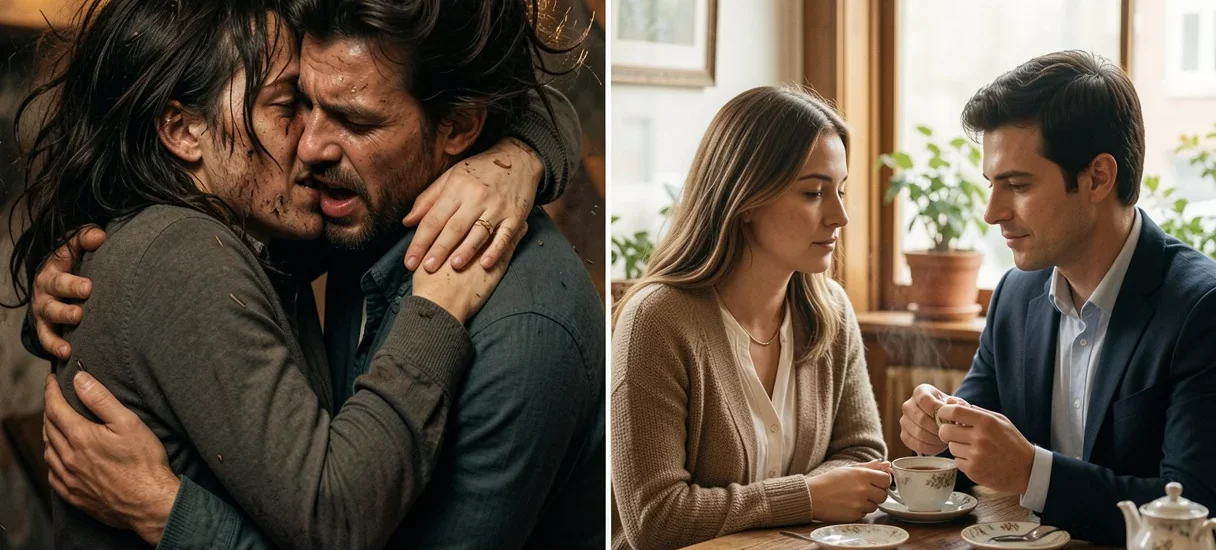
You’ve said it a hundred times. “I love you.”
But have you ever stopped to ask yourself: what do I actually mean?
Because here’s the truth that nobody tells you: being in love with someone and loving someone are not the same thing.
One is a feeling. The other is a choice.
One arrives like a thunderstorm — exciting, overwhelming, impossible to ignore. The other is more like tending a garden — quiet, patient, showing up even when it’s not exciting.
One can disappear overnight. The other holds on when things get hard.
If you’ve ever been confused about why a relationship that started with fireworks ended in ashes — or why you care deeply for someone but don’t feel “in love” — this is for you.
This guide gives you the real, no-BS breakdown of being in love vs. loving someone. The signs. The science. And the hard questions you need to ask yourself before you commit to someone.
| Being IN Love | Loving Someone | |
| Duration | Often temporary (months to 1–2 years) | Can last a lifetime |
| Feeling | Euphoria, obsession, craving | Calm, security, choice |
| Focus | How they make YOU feel | Who THEY are |
| Reaction to flaws | Ignores them or is blind to them | Sees them clearly and accepts them |
| When apart | Anxious, preoccupied, longing | Miss them but function fine |
| After conflict | World feels like it’s ending | Annoying but survivable |
| Long-term potential | Necessary at the start, not enough for forever | Essential for forever |
Real-talk truth: Most romantic relationships start with being “in love.” That’s normal. But if that feeling never evolves into actual loving — the choice, the commitment, the seeing-clearly — the relationship won’t last.
Being in love isn’t magic. It’s chemistry.
| Brain Chemical | What It Does | Why It Feels Like |
| Dopamine | Reward and pleasure | Euphoria, energy, obsessive thinking |
| Norepinephrine | Arousal and focus | Racing heart, butterflies, can’t sleep |
| Phenylethylamine (PEA) | Natural amphetamine | Falling “head over heels” |
| Oxytocin | Bonding and trust | Attachment, safety, “home” feeling |
| Vasopressin | Long-term commitment | Pair-bonding (more in men) |
The timeline:
| Phase | Duration | What Happens |
| Lust | Weeks to months | Driven by testosterone and estrogen |
| Attraction (being “in love”) | 6–18 months (sometimes up to 3 years) | Driven by dopamine, norepinephrine, PEA |
| Attachment (loving) | Lifetime (if nurtured) | Driven by oxytocin and vasopressin |
The hard truth: The “in love” feeling is biologically designed to fade. It’s meant to last just long enough for you to bond and potentially reproduce. After that, nature expects you to shift into attachment — or move on.
This doesn’t mean the love is gone. It means the obsession phase is ending. And that’s when real love begins — or ends.
| Sign | What It Looks Like |
| 1. Obsessive thinking | They’re the first thing you think about when you wake up and the last thing before sleep. |
| 2. Emotional highs and lows | When they text back = euphoria. When they’re distant = devastation. |
| 3. Idealization | You barely notice their flaws. They seem perfect. “They’re different from everyone else.” |
| 4. Physical symptoms | Butterflies, racing heart, loss of appetite, trouble sleeping. |
| 5. Anxious attachment | You feel anxious when you’re apart. You check your phone constantly. |
| 6. Sacrificing your own needs | You cancel plans, change your schedule, ignore your own boundaries to be with them. |
| 7. Future fantasy | You’ve already imagined your wedding, your future home, your children’s names — even if you’ve only dated a few weeks. |
None of these are bad. Being in love is beautiful. It’s also temporary. Problems arise when you confuse this feeling for the foundation of a long-term relationship.
| Sign | What It Looks Like |
| 1. You see their flaws clearly — and stay anyway | You know they’re not perfect. You know their annoying habits. You choose them anyway. |
| 2. You want what’s best for them — even if it’s not you | Real love isn’t possessive. If they’d be happier elsewhere, you’d let them go. |
| 3. Your life doesn’t fall apart when they’re not around | You miss them. You prefer them. But you’re still a whole person on your own. |
| 4. You show up on hard days | Not just for the fun dates and good sex. For the arguments, the illnesses, the boring Tuesday nights. |
| 5. You respect them as a separate person | You don’t need them to be like you. You don’t need to control them. |
| 6. The feeling is steady, not explosive | No more butterflies? That’s normal. What replaces it is warmth, safety, and calm. |
| 7. You choose them every day | Love is a verb. You act loving even when you don’t feel loving. |
Real-talk truth: Loving someone is less exciting than being in love. It’s quieter. Less dramatic. But it’s the only thing that survives the hard years — financial stress, parenting challenges, health crises, aging.
You’ve been dating for 3 months. You’re obsessed. You’ve never felt this way. You’re already planning your life together.
But do you actually know them? Their real flaws? Their triggers? Their childhood wounds? Their worst traits?
Probably not.
The danger: You’re in love with a fantasy. When reality hits (usually 6–18 months in), you’ll feel “let down” or “betrayed” — when really, you just never saw them clearly.
This is every long-term relationship eventually.
The initial fireworks fade. The obsessive texting stops. You’re not staying up all night talking anymore.
Some people panic and leave — chasing the next dopamine hit. Other people realize: this is where real love starts.
The danger: Leaving a healthy, loving relationship because you’re addicted to the “in love” feeling. This is why some people serial-date or have affairs. They’re chasing a chemical state that is biologically impossible to maintain with the same person forever.
Sometimes the absence of “in love” feelings isn’t just the natural fading of novelty. Sometimes it means:
The danger: Staying out of obligation or comfort, when you’re both settling for less than real romantic partnership.
Ask yourself these questions — and answer honestly.
| Question | If You’re IN Love | If You Actually Love Them |
| How do you feel when they make a mistake? | Annoyed, disappointed, “they ruined the fantasy” | Accepting, understanding, “they’re human” |
| Could you be happy alone? | No (terrifying thought) | Yes (prefer them, but fine alone) |
| Do you trust them completely? | Maybe — but trust is often untested | Yes — tested and proven |
| Have you seen them at their worst? | Probably not | Yes (and you stayed) |
| Would you stay if they got sick? | You think so — but you haven’t been tested | You already have (or you know you would) |
| Do you love them or how they make you feel? | How they make you feel (special, seen, alive) | Them — their character, their soul |
| Stage | Duration | What’s Happening | What to Do |
| 1. Infatuation (being “in love”) | 3–18 months | Chemistry, obsession, idealization | Enjoy it. Don’t make major life decisions (moving in, marriage, pregnancy) yet. |
| 2. Reality sets in | 3–12 months after stage 1 | Flaws appear. Conflict emerges. Feelings calm down. | Don’t panic. This is normal. Start choosing love instead of just feeling it. |
| 3. Commitment (loving) | Lifelong | Clear-eyed acceptance. Steady warmth. Team mentality. | Keep choosing. Keep showing up. Keep dating each other. |
| 4. Deep attachment | Years to decades | Oxytocin-rich bond. “Home.” Knowing each other completely. | Protect it. Prioritize it. Don’t take it for granted. |
The catch: Many relationships end in stage 2 because people think the fading of “in love” feelings means they picked the wrong person. Often, they didn’t. They just don’t understand how love works.
Yes — but not in the same way.
After years together, you won’t feel the obsessive, butterflies-in-your-stomach, can’t-sleep kind of “in love.” That’s biological. It can’t last.
But you can experience:
| Type of “In Love” Feeling | How to Get It Back |
| Novelty excitement | Do new things together (travel, classes, adventures) |
| Anticipation | Spend time apart intentionally (absence creates longing) |
| Playful flirtation | Date each other again. Flirt. Dress up. Don’t take each other for granted. |
| Physical attraction | Prioritize intimacy. Touch without expectation of sex. |
| Feeling “seen” | Really listen. Ask deep questions. Stay curious about your partner. |
You won’t get back the obsessive, anxious, chemically-driven “in love” of early dating. That’s not a loss — it’s a maturation. What replaces it is better: secure, calm, chosen love.
Thinking “in love” is required for love.
It’s not.
You can love someone deeply and not feel “in love” on a given Tuesday. You can be annoyed with them, bored with them, even angry at them — and still love them.
Conversely, you can be completely “in love” with someone and not actually love them at all. You love the way they make you feel. You love the fantasy. But you don’t love them — their real, flawed, human self.
The most important sentence you’ll read today:
Being in love is a feeling. Loving someone is a choice. Feelings change. Choices hold.
| Sign | Why |
| You only love the idea of them | You’re attached to a fantasy, not reality |
| You’re staying because you’re afraid to be alone | That’s fear, not love |
| There’s abuse (emotional, physical, financial) | Love doesn’t hurt. Leave. |
| You’ve tried for years and feel nothing but resentment | Loving someone doesn’t mean staying forever |
| You’ve never felt “in love” — but you love them like a friend | They deserve romantic love. So do you. |
| Sign | Why |
| The initial “in love” feeling faded — but you still choose each other | That’s normal. That’s real love. |
| You see their flaws clearly and accept them | You’re not in a fantasy. You’re in reality. |
| You’ve weathered hard times together and came out stronger | That’s the evidence of real love. |
| You feel safe, respected, and seen — even if the butterflies are gone | Safety + respect > butterflies for long-term happiness. |
Yes. This happens in:
The question is: do you want romantic love? If yes, and it’s never been there, that’s a problem. If it was there and evolved into deep love — that’s healthy.
Research suggests 6–18 months for the intense, obsessive phase. Some studies say up to 3 years. After that, oxytocin and vasopressin (bonding hormones) take over — if the relationship survives.
Not automatically. Ask yourself:
If you still choose each other, respect each other, and feel warmth — you’re fine. If you feel nothing but resentment or indifference — that’s a problem.
Yes — but not the obsessive, anxious version. You can cultivate:
What you won’t get back: the chemical storm of early dating. Don’t chase that. It’s a ghost.
| Attachment | Being In Love |
| Fear of being alone | Genuine enjoyment of them |
| Comfortable but not excited | Excited and comfortable |
| You stay because it’s easy | You stay because you choose them |
| You’d be devastated if they left (loss of routine) | You’d be devastated if they left (loss of them) |
If you’re staying because leaving feels terrifying — that’s attachment. If you’re staying because they genuinely make your life better — that’s love (with or without the “in love” feeling).
Short answer: necessary at the beginning, not sufficient for the long haul.
The initial “in love” feeling gets you through the hard early adjustments. But marriages that last 20, 30, 50+ years run on chosen love — not butterflies.
That’s the cruelest trick of brain chemistry. Dopamine doesn’t care about your well-being. It cares about reward and unpredictability.
If someone is bad for you (abusive, manipulative, unavailable, addictive), the “in love” feeling is not a sign to stay. It’s a sign to get help. Love shouldn’t feel like chaos.
Yes. The chemicals don’t know monogamy. You can feel attraction, obsession, and dopamine rushes for multiple people.
But loving (the choice, the commitment, the action) two people at once? That’s much harder. Most people aren’t built for it. And it almost always hurts everyone involved.
Here’s what nobody tells you about love.
The movies lied. Love isn’t just the grand gestures, the dramatic declarations, the running-through-airports moments.
Those are the trailer. The movie is much longer and much quieter.
Being in love is a feeling. It arrives without your permission. It leaves without warning. You can’t build a life on feelings alone — because feelings always change.
Loving someone is a choice. You choose them when they’re annoying. You choose them when you’re tired. You choose them when the butterflies are long gone and all that’s left is two imperfect people sharing one imperfect life.
The best relationships have both. They start with being “in love” — the fireworks, the obsession, the can’t-eat-can’t-sleep. And then, when that fades (because it always fades), they shift into loving — the choosing, the showing up, the staying.
If you’re chasing the “in love” feeling forever, you’ll spend your life disappointed — or jumping from person to person, always chasing a high that was never meant to last.
If you’re willing to let the fireworks fade into a steady, warm fire — that’s where real love lives.
One isn’t better than the other. They’re just different. And knowing the difference might save you years of heartache.
Choose wisely.