Live strong. Eat wise. Feel alive
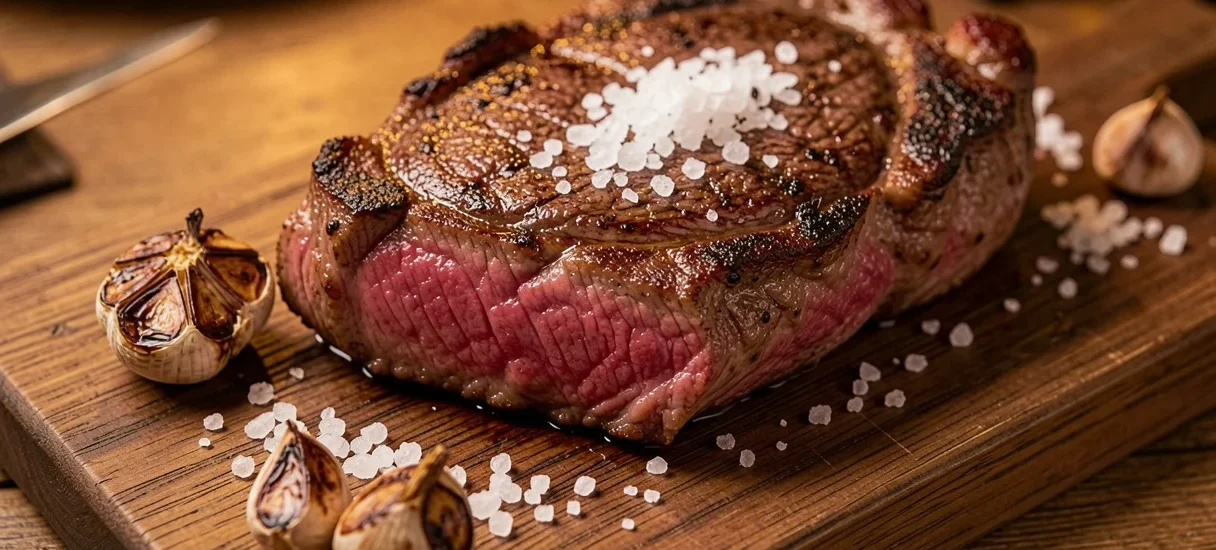
A great steak doesn’t require a grill, a fancy restaurant, or a professional chef.
It requires three things: a good cut of beef, a hot pan, and knowing when to stop touching it.
Most people overcook steak because they’re afraid of undercooking it. Or they move it around too much. Or they cut into it immediately to “check if it’s done” — and all the juices run out onto the plate instead of staying in the meat.
Here’s the truth: cooking a restaurant-quality steak at home is one of the easiest kitchen skills to learn. And once you learn it, you’ll never order steak out again.
This guide gives you a foolproof, step-by-step method for pan-seared beef steak — juicy, tender, with a deep brown crust. No grill needed. No complicated equipment. Just a cast-iron skillet (or any heavy pan) and 15 minutes.
Not all beef cuts work well in a pan. Choose one of these:
| Cut | Tenderness | Fat Content | Best For |
| Ribeye | Very tender | High (marbled) | Rich, juicy, flavorful |
| Sirloin | Tender | Medium | Leaner, beefy flavor |
| Strip loin (New York strip) | Very tender | Medium-high | Balanced, firm texture |
| Tenderloin (filet mignon) | Most tender | Low | Buttery soft, mild flavor |
| Top sirloin cap (picanha) | Tender | Medium | Flavorful, great crust |
Best for beginners: Sirloin or strip loin. They’re forgiving, widely available, and reasonably priced.
Best for flavor: Ribeye. The fat marbling melts into the meat as it cooks, creating a rich, juicy steak.
What to avoid: Chuck, brisket, round, flank (these need slow cooking, not pan-searing).
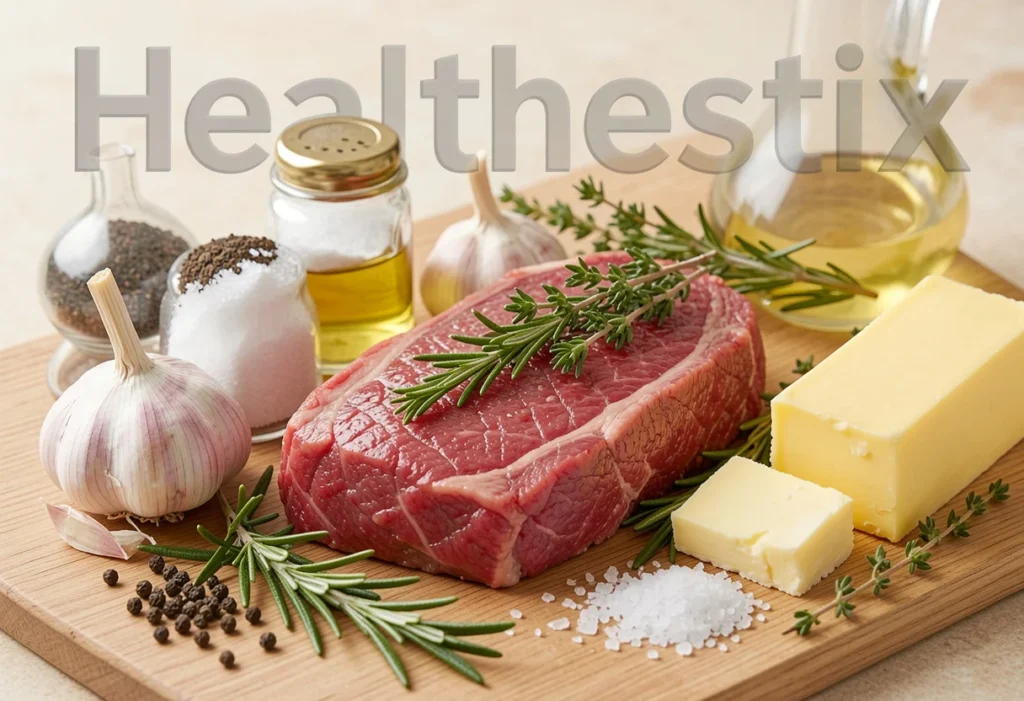
| Ingredient | Amount | Notes |
| Beef steak | 1–2 (6–8 oz each) | 1–1.5 inches thick (thicker is better) |
| Salt | 1 tsp per steak | Kosher or sea salt (not table salt) |
| Black pepper | 1/2 tsp per steak | Freshly ground |
| Neutral oil | 1 tbsp | Avocado, canola, vegetable, or grapeseed (not olive oil — it burns) |
| Butter | 2 tbsp | Unsalted (adds richness) |
| Garlic | 2–3 cloves | Smashed, skin on |
| Fresh rosemary or thyme | 2 sprigs | Optional, for basting |
| Flaky sea salt (finishing) | To taste | Maldon or similar |
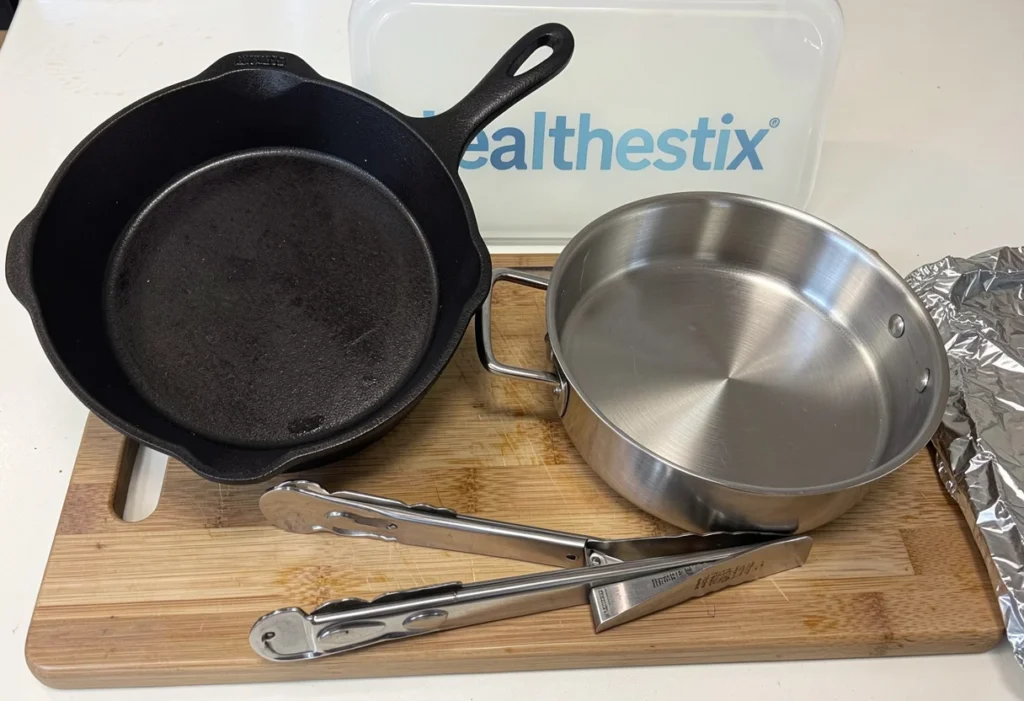
| Equipment | Why It Matters |
| Cast-iron skillet or stainless steel pan | Holds heat, creates crust (non-stick pans don’t sear well) |
| Tongs | Flip steak without piercing it |
| Meat thermometer | Takes guesswork out of doneness (highly recommended) |
| Cutting board | For resting the steak |
| Aluminum foil | To tent while resting |
Take the steak out of the refrigerator. Let it sit on the counter, uncovered.
| Why This Matters |
| A cold steak sears unevenly. The outside burns before the inside cooks. Room temperature steak cooks more evenly from edge to center. |
Do not skip this step.
Use paper towels to pat both sides of the steak until absolutely dry.
| Why This Matters |
| Moisture is the enemy of a good crust. Water on the surface turns to steam, not browning. Dry surface = deep brown, crispy crust. |
Sprinkle salt and pepper on both sides. Press it into the meat with your fingers.
| Cut Size | Salt Amount | Pepper Amount |
| 6 oz steak | 1/2 tsp per side | 1/4 tsp per side |
| 8 oz steak | 3/4 tsp per side | 1/3 tsp per side |
| 12 oz steak | 1 tsp per side | 1/2 tsp per side |
Pro tip: Season right before the steak hits the pan — not 10 minutes earlier. Salt draws out moisture over time. You want that moisture still inside.
Place your cast-iron or stainless steel pan on medium-high to high heat for 2–3 minutes.
| Test for Readiness |
| Flick a drop of water into the pan. It should dance and evaporate immediately — not sizzle slowly. The pan should be smoking slightly. |
Add the neutral oil. Swirl to coat the pan.
Place the steak in the pan away from you (to avoid oil splatter). Lay it down gently.
| Do NOT Do | Do This Instead |
| Don’t move it. Don’t peek under it. Don’t slide it around. | Leave it completely alone for 2–3 minutes. Let the crust form. |
Why: Moving the steak prevents the Maillard reaction (the chemical process that creates a brown, flavorful crust).
After 2–3 minutes, the steak should release easily from the pan. If it sticks, wait 30 more seconds.
Flip the steak with tongs. Sear the other side for 2–3 minutes.
| Thickness | First Side (minutes) | Second Side (minutes) |
| 1 inch | 2 minutes | 2 minutes |
| 1.25 inches | 2.5 minutes | 2.5 minutes |
| 1.5 inches | 3 minutes | 3 minutes |
During the last 1–2 minutes of cooking:
| Step | Action |
| 1 | Reduce heat to medium-low |
| 2 | Add 2 tbsp butter, smashed garlic cloves, and fresh rosemary/thyme |
| 3 | Tilt the pan slightly so butter pools |
| 4 | Use a spoon to continuously baste the steak with the foaming butter |
| 5 | Repeat for 60–90 seconds |
This step creates the signature restaurant-style garlic butter steak.
| Doneness | Internal Temperature | Center Color |
| Rare | 120–125°F (49–52°C) | Red, cool center |
| Medium-rare | 130–135°F (54–57°C) | Warm red center (recommended) |
| Medium | 140–145°F (60–63°C) | Pink, warm |
| Medium-well | 150–155°F (65–68°C) | Slightly pink |
| Well done | 160°F+ (71°C+) | No pink (not recommended) |
Best doneness for juiciness: Medium-rare (130–135°F). The steak will continue to cook while resting (carryover cooking), so pull it 5°F below your target.
Transfer the steak to a cutting board. Tent loosely with aluminum foil.
| Rest Time | Thickness |
| 5 minutes | 1 inch |
| 7 minutes | 1.25 inches |
| 10 minutes | 1.5 inches+ |
Why resting matters:
| What Happens If You Don’t Rest | What Happens If You Rest |
| Juices run out onto the cutting board | Juices redistribute inside the steak |
| Steak tastes dry | Steak stays juicy |
| Lost flavor | Maximum flavor |
Do not skip this step. Cutting into a steak immediately is the #1 mistake home cooks make.
Look at the steak. You’ll see lines (muscle fibers) running in one direction.
| Cut With the Grain (Wrong) | Cut Against the Grain (Right) |
| Long, tough muscle fibers | Short, easy-to-chew fibers |
| Chewy, stringy texture | Tender, soft texture |
Slice perpendicular to the lines at a 45-degree angle.
Sprinkle with flaky sea salt. Serve immediately.
| Test | Rare | Medium-Rare | Medium | Well Done |
| Touch (raw steak) | Very soft, jiggly | Soft, slightly springy | Firm with some give | Very firm |
| Compare to your hand | Relaxed hand, pad below thumb | Slightly flexed hand | Fully flexed hand | Clenched fist |
| Juice color | Deep red | Pinkish red | Clear pink | Clear |
Note: The hand test takes practice. Buy a $10 meat thermometer — it’s worth it.
After removing the steak, make a quick pan sauce:
| Step | Action |
| 1 | Leave 1 tbsp of butter/drippings in the pan |
| 2 | Add 1 minced shallot or 2 more garlic cloves (30 seconds) |
| 3 | Add 1/2 cup beef broth or red wine, scrape up brown bits |
| 4 | Simmer 2–3 minutes until reduced by half |
| 5 | Whisk in 1 tbsp cold butter |
| 6 | Pour over sliced steak |
| Mistake | Why It’s Bad | Fix |
| Cooking steak cold from fridge | Uneven cooking, gray band around edges | Rest 30–60 minutes at room temp |
| Not drying the steak | Steamed instead of seared, no crust | Pat completely dry with paper towels |
| Overcrowding the pan | Temperature drops, steams instead of sears | Cook one steak at a time (or use two pans) |
| Moving the steak while searing | Prevents crust formation | Leave it alone for 2–3 minutes |
| Flipping multiple times | Disrupts crust, uneven cooking | Flip once (twice total) |
| Cutting immediately after cooking | All juices run out | Rest 5–10 minutes |
| Using non-stick pan | Cannot get hot enough, no crust | Use cast iron or stainless steel |
| Using olive oil | Burns at high heat, bitter taste | Use neutral oil (avocado, canola, grapeseed) |
Yes. Use any heavy-bottomed pan that can handle high heat:
| Pan Type | Works? | Notes |
| Stainless steel | ✅ Yes | Best alternative |
| Non-stick | ❌ No | Cannot get hot enough, coating damages |
| Enameled cast iron | ✅ Yes | Same as cast iron |
| Carbon steel | ✅ Yes | Excellent |
| Method | How |
| Marinate | Acid-based marinade (lemon, vinegar, yogurt) for 2–4 hours |
| Mechanical tenderizing | Poke with a fork or use a meat mallet |
| Salt brine | Salt 1–2 hours before cooking (draws moisture back in) |
| Slice against grain | This matters most — short fibers = tender bite |
Yes. Mutton/lamb steak is leaner and more gamey. Adjustments:
| Change | Why |
| Cook 1–2 minutes less per side | Lamb cooks faster than beef |
| Add rosemary (strong herb) | Complements lamb’s natural flavor |
| Medium doneness (140–145°F) | Lamb is better at medium than medium-rare |
| Marinate overnight (yogurt + spices) | Tenderizes and reduces gamey taste |
| Method | How | Best For |
| Oven (lowest) | 250°F for 10–15 minutes until warm | Whole steak |
| Pan (quick) | 30 seconds per side in hot pan | Sliced steak |
| Microwave (avoid) | Not recommended — ruins texture | — |
Never reheat steak past medium. It will become tough and dry.
Yes. Wrap tightly in plastic wrap + foil (or vacuum seal). Freeze for up to 3 months.
To reheat from frozen: 300°F oven for 15–20 minutes (covered with foil). Or thaw overnight in fridge, then pan-sear 30 seconds per side.
| Oil | Smoke Point | Best For |
| Avocado oil | 520°F (271°C) | Highest, neutral taste |
| Ghee (clarified butter) | 485°F (252°C) | Buttery flavor, high heat |
| Grapeseed oil | 420°F (216°C) | Neutral, affordable |
| Canola oil | 400°F (204°C) | Fine, cheap |
| Olive oil (extra virgin) | 325°F (163°C) | Too low — burns, becomes bitter |
Winner: Avocado oil or ghee.
| Cause | Fix |
| Pan not hot enough | Heat pan 2–3 minutes before adding oil |
| Steak not dry | Pat completely dry with paper towels |
| Pan overcrowded | Cook one steak at a time |
| Moved steak too early | Leave alone for 2–3 minutes |
| Technique | How |
| Thicker steak | 1.5 inches allows high heat without overcooking center |
| Reverse sear | Oven at 250°F until internal temp reaches 115°F, then sear 1 minute per side in hot pan |
| Dry brine | Salt steak and leave uncovered in fridge overnight (draws moisture to surface, dries exterior) |
The reverse sear method is the most foolproof for thick steaks.
| Thickness | Doneness | First Side (min) | Second Side (min) | Rest (min) |
| 1 inch | Medium-rare | 2 | 2 | 5 |
| 1 inch | Medium | 2.5 | 2.5 | 5 |
| 1.25 inches | Medium-rare | 2.5 | 2.5 | 7 |
| 1.5 inches | Medium-rare | 3 | 3 | 10 |
Cooking a perfect steak at home is not about expensive equipment or secret techniques. It’s about five things:
| Rule | Why |
| Start with room temperature steak | Even cooking |
| Pat it completely dry | Good crust |
| Hot pan, don’t move it | Golden brown sear |
| Use a meat thermometer | Perfect doneness every time |
| Rest before cutting | Juices stay inside |
The first time you cook steak this way, you’ll be nervous. You’ll want to peek. You’ll want to cut into it immediately to check.
Don’t.
Trust the process. Trust the thermometer. Trust the rest.
By your third steak, you’ll never order one at a restaurant again. Because yours will be better.